- Develop a model for predicting fraudulent transactions for a financial company and use insights from the model to develop an actionable plan.
- Data for the case is available in CSV format having 6362620 rows and 10 columns.
- Engineered features from the text and created more features.
- Optimized RandomForestClassifier and XGBClassifier used to reach the best model.
- Random Forest accuracy: 0.9999942371748326
- XG Boost accuracy: 0.9998643116619673
Python Version: 3.7
Packages: pandas, numpy, sklearn, xgboost, matplotlib, seaborn, warnings, flask, json, pickle.
Dataset Link: https://www.kaggle.com/datasets/chitwanmanchanda/fraudulent-transactions-data
- step
- type
- amount
- oldbalanceOrg
- newbalanceOrig
- oldbalanceDest
- newbalanceDest
- errorBalanceOrg
- errorBalanceDest
- hoursOfDay
- isFraud
After loading the data, I needed to clean it up so that it was usable for our model. And insight from the eda I made the following changes and created the following variables:
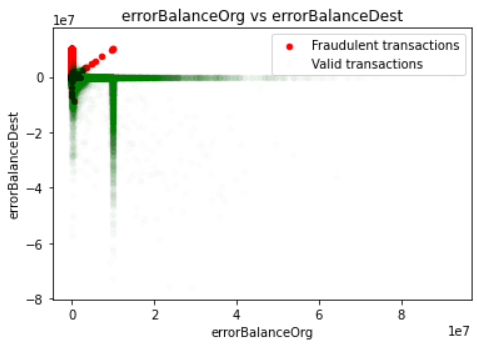
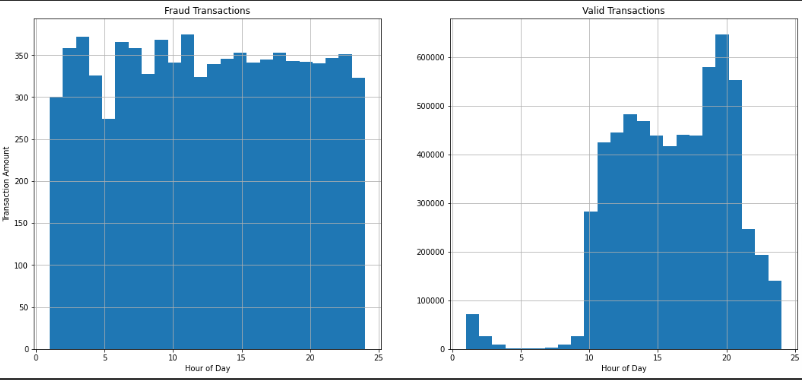
- Created the three variables 'errorBalanceOrg', 'errorBalanceDest', 'hoursOfDay'.
- Drop the three variables 'nameOrig', 'nameDest', 'isFlaggedFraud'.
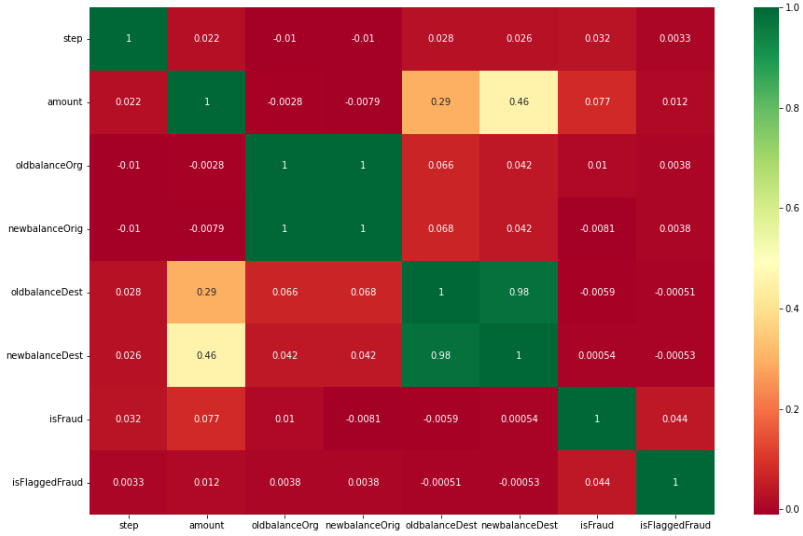
Distributions of the data and the value counts for the various variables. Below are a few highlights from the pivot tables.
First, I transformed the categorical variables into dummy variables. I also split the data into train and tests sets with a test size of 30%.
Then do feature transformation on the variables to bring the values of the features to similar scale.
I tried two different models and evaluated them using Confustion matrix, accuracy_score and classification report.
Models:
- RandomForestClassifier – 'n_estimators':15, 'oob_score':True, 'class_weight':'balanced', 'n_jobs':-1, 'random_state':42.
- XGBClassifier – 'max_depth':3, 'scale_pos_weight': weights, 'n_jobs':-1, 'random_state' : 42, 'learning_rate':0.1.
The Random Forest and XG Boost performed both performed well on the test and validation sets.
-
Random Forest : 0.9999942371748326 accuracy score
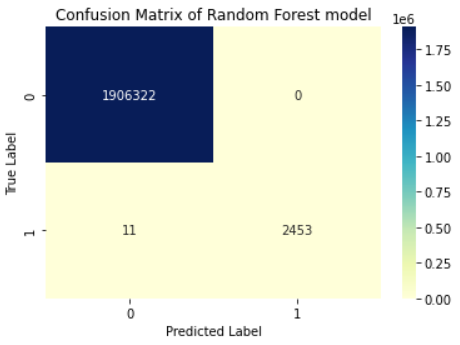
-
XG Boost: 0.9998643116619673 accuracy score
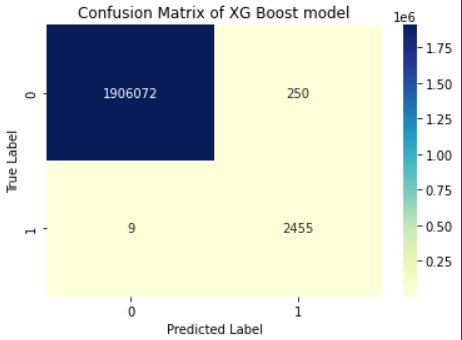
In this fraud detection problem, two machine learning algorithms were employed - Random Forest and XG Boost. After evaluating their performance, it was found that Random Forest outperformed XG Boost.