Design ideas
Let's consider a simple dag:
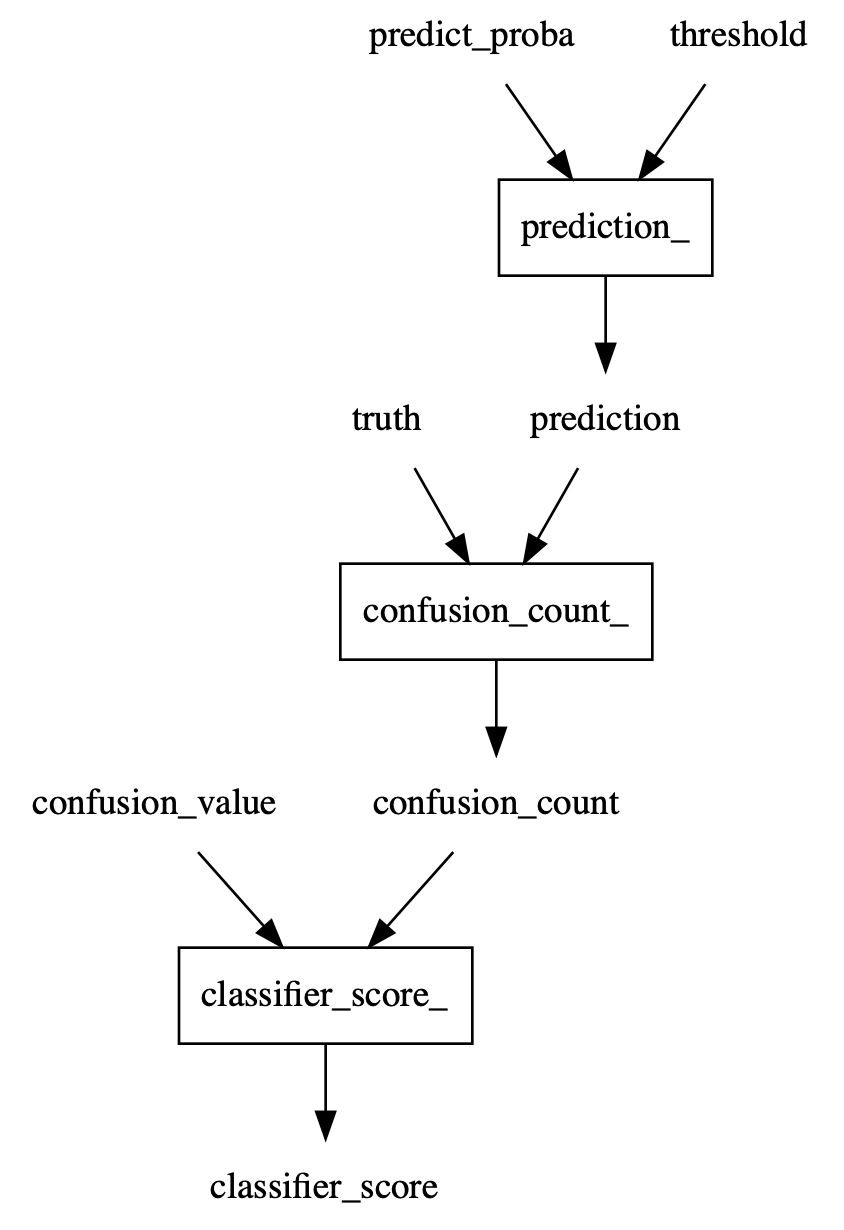
In the dag above, prediction is a coparent of truth, because they share the same child confusion_count
subdag = sdag[['truth', 'prediction', 'confusion_value'],:]
subdag.dot_digraph()
This code gives the expected result:
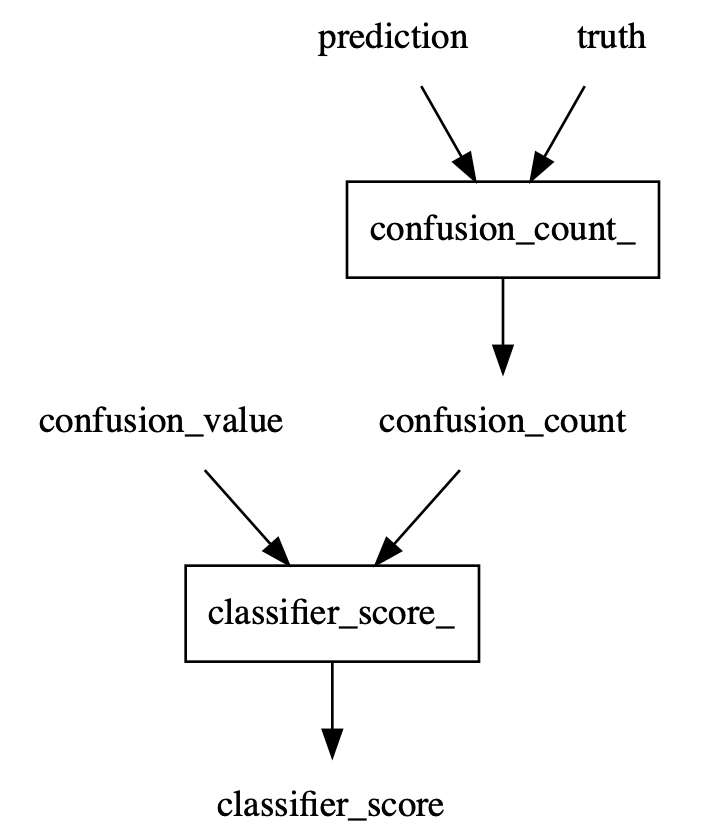
If in the above, prediction is missing, the subdag generated is the same (i.e the missing coparent should be added, at least by default) This is already the case.
subdag = sdag[['truth', 'confusion_value'],:]
subdag.dot_digraph()For example we consider
subdag = sdag[['truth', 'prediction'],:]
subdag.dot_digraph()
That means that confusion_value is now absent.
def f(a,b):
    return a+b

def g(b,c):
    return b*c

def h(f,g):
    return f-g

mydag = DAG([f,g,h])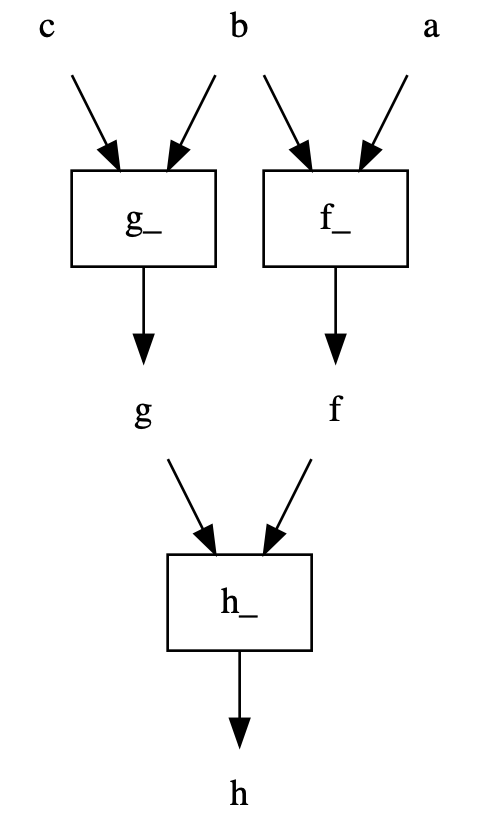
smydag = mydag[['a','b','c'],:]
smydag.dot_digraph()
This produces the wrong result:
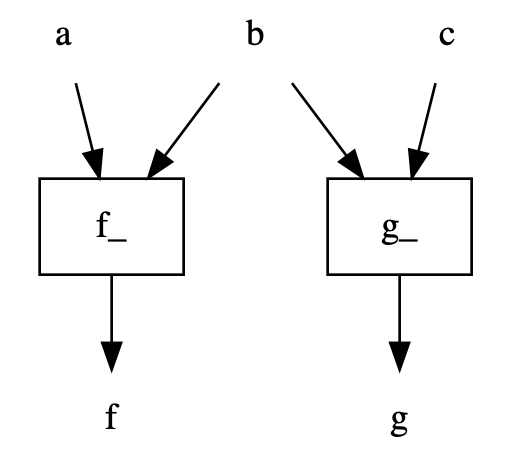
Why is that? Because of the following:
ins | descendants(ins)is not the same as:
ins | descendants(ins) | descendants(ins | descendants(ins))In our example: ins=['a','b','c']